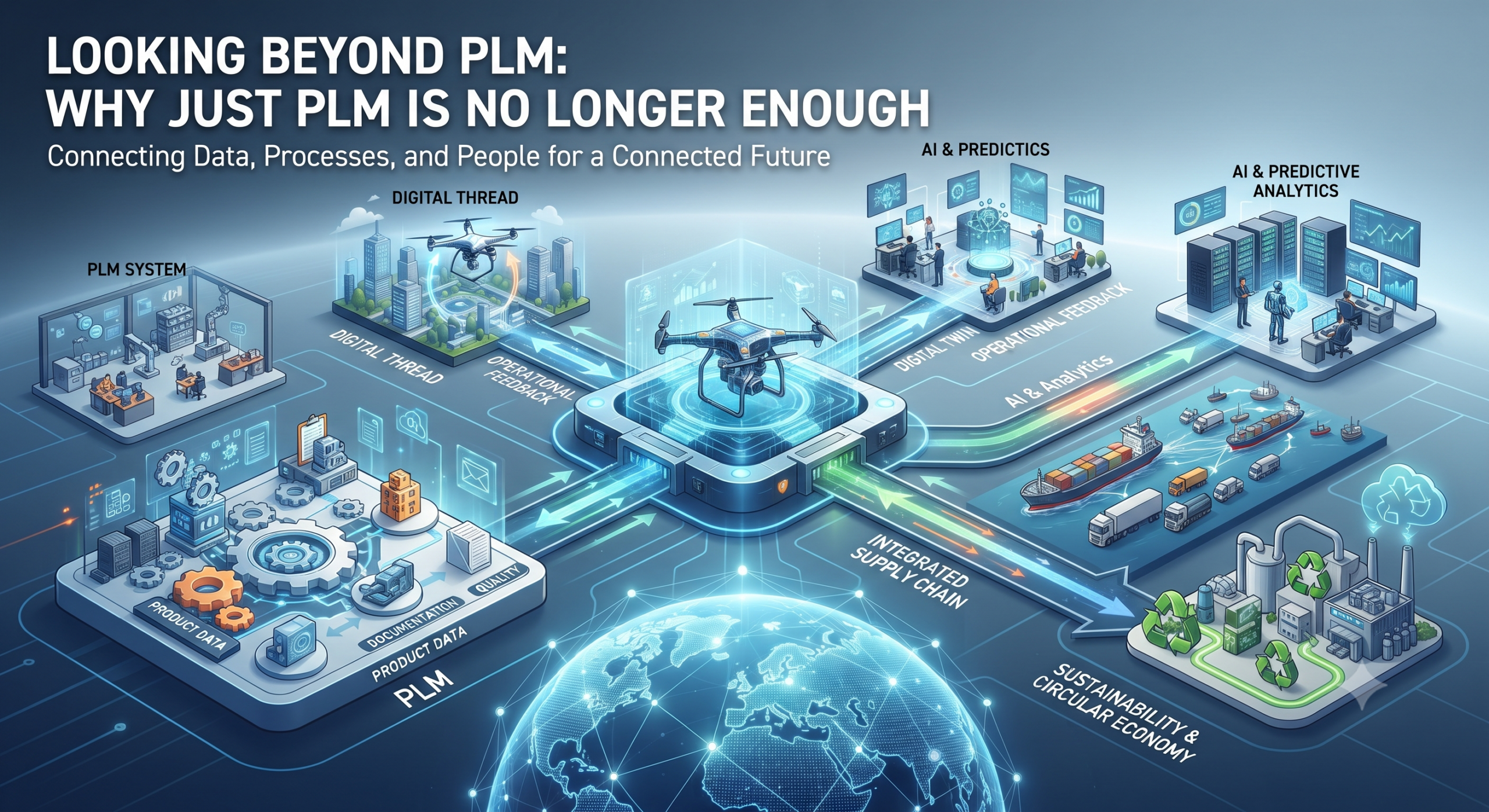
For decades, Product Lifecycle Management (PLM) has served as the backbone of product development, helping organizations manage designs, engineering changes, bills of materials, and product data. But as products become smarter, more connected, and increasingly software-driven, a fundamental shift is underway.
The future is not just about PLM. The future is Beyond PLM
The Evolution of PLM
Traditional PLM systems were designed to manage product information across the lifecycle—from concept and design to manufacturing and service. While this remains important, today’s business environment demands much more. Modern enterprises need to connect engineering, manufacturing, supply chains, sustainability, AI, and customer feedback into a unified ecosystem.
Industry experts increasingly describe PLM as evolving from a system of record into an enterprise-wide orchestration platform that connects product strategy, execution, compliance, and operational intelligence.
In other words, managing data is no longer enough. Organizations must manage knowledge, intelligence, and decisions.
Trend #1: AI-Powered Product Intelligence
Artificial Intelligence is rapidly transforming how products are designed, validated, and improved. Rather than simply storing product information, next-generation platforms are using AI to:
- Generate engineering insights
- Predict change impacts
- Detect design compliance issues
- Optimize product configurations
- Automate requirements management
AI is becoming deeply embedded in product development workflows, turning PLM repositories into intelligent decision-support systems. Leading analysts predict AI will play a major role in product innovation over the next several years.
The beyond PLM vision is not about managing documents—it is about enabling autonomous and augmented engineering.
Trend #2: The Rise of the Digital Thread
One of the hottest topics in manufacturing and engineering today is the Digital Thread.
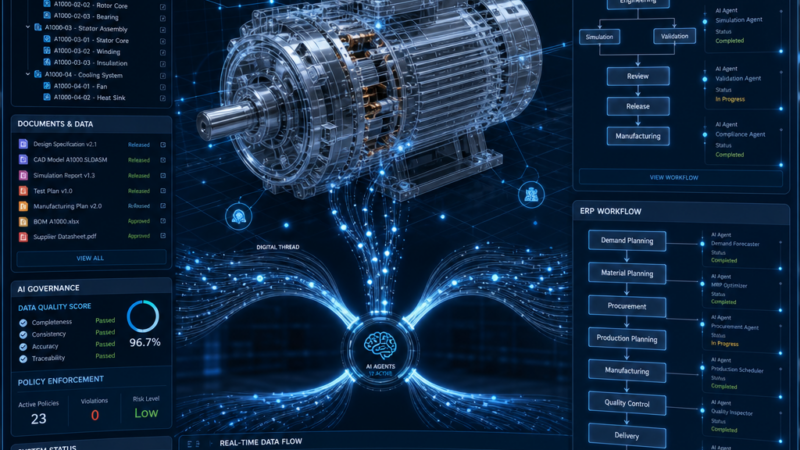
The Digital Thread connects data across requirements, design, simulation, manufacturing, supply chain, service, and field operations. Instead of isolated silos, organizations gain complete traceability throughout the product lifecycle.
Imagine being able to instantly trace:
- A customer complaint
- Back to a product configuration
- To a manufacturing batch
- To an engineering change
- To the original requirement
That’s the power of moving beyond traditional PLM.
The winners of the next decade will not merely manage product data; they will connect product intelligence across the enterprise.
Trend #3: Software-Defined Products
Cars, industrial equipment, medical devices, and consumer products are increasingly becoming software-defined.
Product updates no longer happen once a year. They happen continuously through software releases and over-the-air updates.
This creates new challenges:
- Version management
- Configuration complexity
- Cybersecurity compliance
- Traceability between software and hardware
As products become dynamic and continuously evolving, PLM must extend beyond engineering files and become a platform supporting software lifecycle management, systems engineering, and digital product experiences.
This is a defining element of the beyond PLM movement.
Trend #4: Sustainability by Design
Sustainability has moved from corporate reporting to product engineering.
Organizations face growing pressure to understand:
- Carbon footprint
- Material sourcing
- Circular economy requirements
- Regulatory compliance
- ESG performance
Modern product platforms are increasingly expected to provide environmental intelligence alongside cost, quality, and performance metrics. Product decisions now require sustainability data from the earliest stages of design.
In a beyondPLM world, sustainability is not an afterthought—it becomes a design parameter.
Trend #5: Supply Chain Resilience
Recent global disruptions exposed the risks of disconnected product and supply chain information.
Engineering decisions can no longer occur independently from sourcing realities.
Today’s leading manufacturers are integrating:
- Supplier intelligence
- Risk management
- Material availability
- Cost modeling
- Compliance data
directly into product development processes. Supply chain resilience has become a critical strategic priority for manufacturers investing in digital transformation.
The next generation of PLM platforms must connect engineering with real-time operational realities.
Beyond PLM Means Connecting the Enterprise
The most important shift is philosophical.
Traditional PLM asked:
“How do we manage product data?”
The beyond PLM question is:
“How do we create a connected product intelligence ecosystem?”
This includes:
✅ PLM
✅ ERP
✅ MES
✅ Digital Twin
✅ IoT
✅ AI Copilots
✅ Supply Chain Systems
✅ Sustainability Platforms
✅ Customer Experience Data
The future belongs to organizations that break down silos and establish a continuous flow of information across the entire value chain.
The Beyond PLM Imperative
The next generation of product innovation will be driven by intelligence, not information.
Companies that embrace the beyond PLM mindset will gain:
- Faster innovation cycles
- Improved product quality
- Greater engineering productivity
- Better sustainability outcomes
- Stronger supply chain resilience
- Enhanced customer experiences
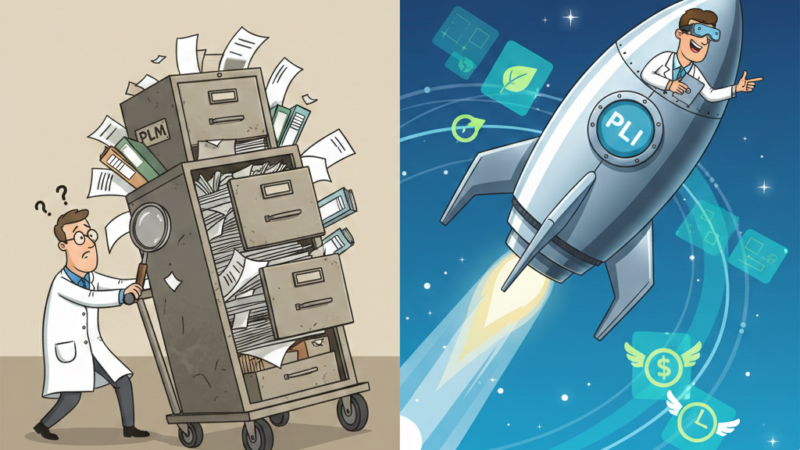
PLM is not disappearing.
It is evolving.
And the organizations that recognize this evolution today will define the future of product development tomorrow.
Final Thought
The conversation is no longer about implementing PLM.
The conversation is about what comes next.
That future is beyond PLM—where AI, Digital Threads, sustainability, and connected enterprise intelligence converge to create truly adaptive, data-driven product ecosystems.