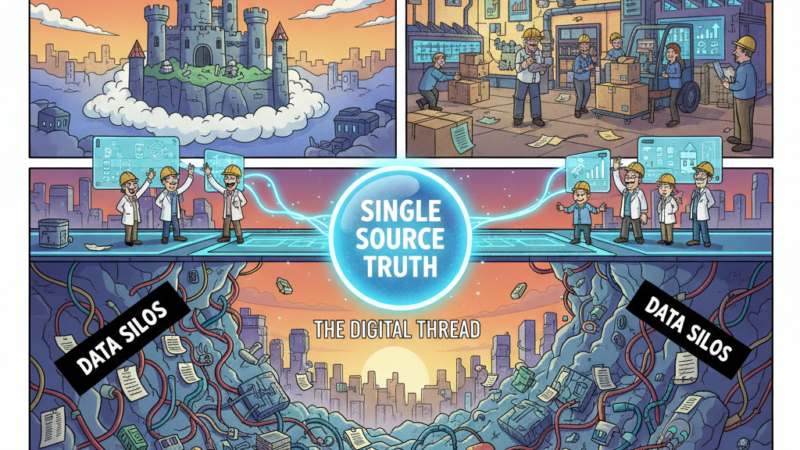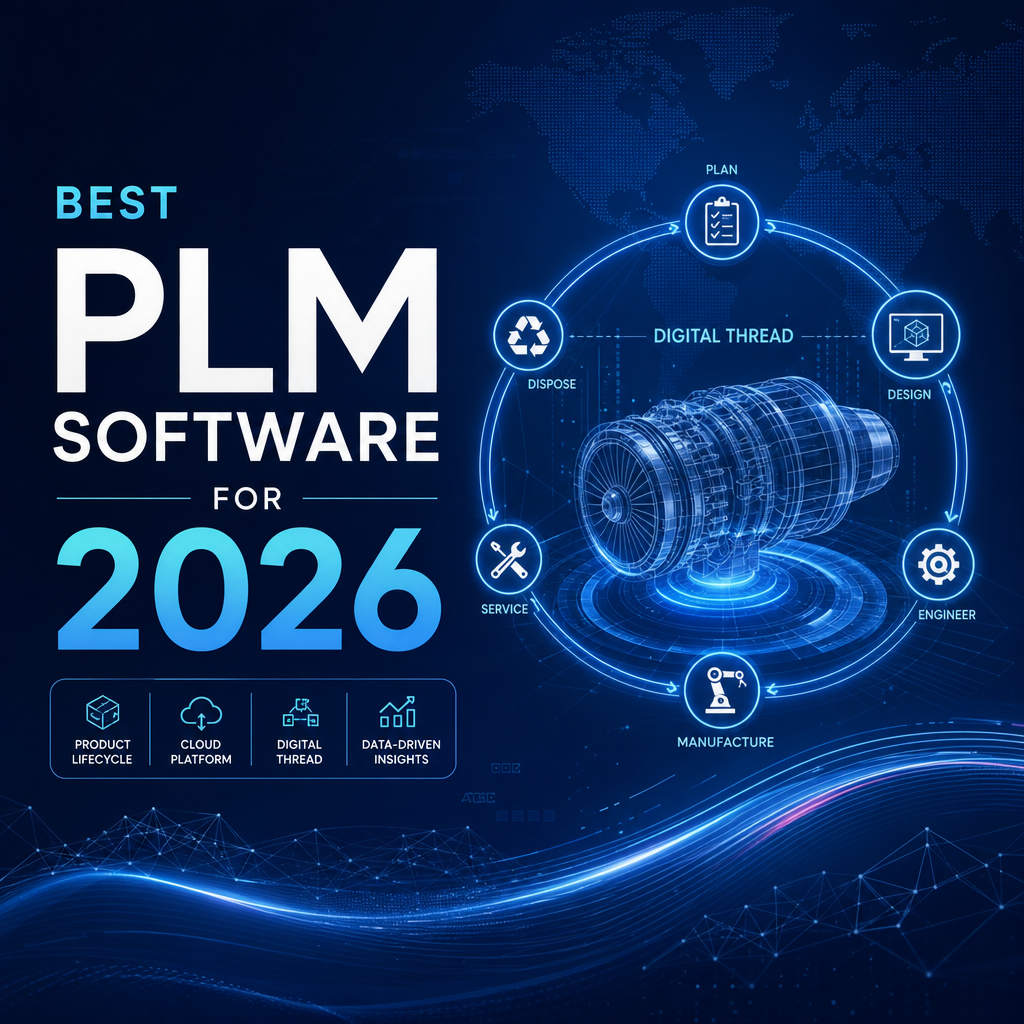
Choosing the best PLM software in 2026 is no longer just about managing CAD files or tracking engineering changes. Today’s PLM platforms must support cloud scalability, AI‑driven insights, secure collaboration, and end‑to‑end digital thread connectivity across engineering, manufacturing, quality, and service.
This guide compares the top PLM systems for 2026 across the criteria that matter most:
- Cost & total ownership
- Security & compliance
- Usability & user interface
- Functional depth
- Infrastructure & deployment flexibility
- Support ecosystem
- Industry fit
It’s designed to help engineering leaders, CIOs, and product teams choose the right PLM platform for their scale, industry, and digital transformation roadmap.
Siemens Teamcenter: Best PLM for Large, Complex Engineering Organizations
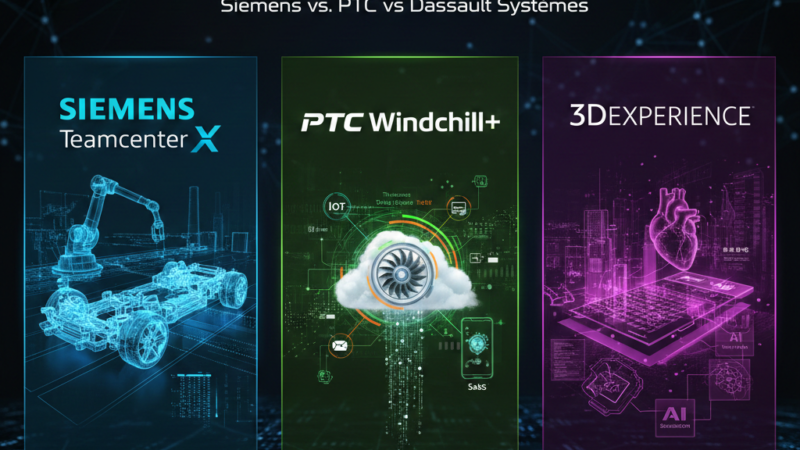
Siemens Teamcenter remains one of the top PLM systems in 2026 for enterprises with complex product structures, multi‑domain engineering, and strict compliance requirements. Its strength lies in deep lifecycle governance, variant configuration, and tight integration with Siemens NX.
Teamcenter’s cost is on the higher end, but its security, auditability, and enterprise‑grade workflows make it ideal for industries where traceability is non‑negotiable. The user interface has improved, though onboarding still requires training due to the platform’s depth.
Teamcenter excels in functionality, offering advanced configuration management, digital thread connectivity, and manufacturing readiness. With both cloud and on‑premise deployment options, it supports hybrid modernization strategies.
Teamcenter is best suited for automotive, aerospace, and industrial manufacturing, where engineering complexity demands a robust PLM backbone.
PTC Windchill: Best PLM for Change Management and Engineering Governance
PTC Windchill is consistently ranked among the best PLM platforms for 2026, especially for organizations prioritizing change control, traceability, and multi‑site engineering collaboration.
Windchill’s security and governance capabilities are enterprise‑grade, making it a strong fit for regulated industries. The UI is functional but dense, reflecting its engineering‑first design philosophy.
Functionally, Windchill offers deep capabilities across product data management, configuration, and collaboration. Its cloud‑first roadmap and integration with PTC Creo strengthen its position for digital transformation.
Windchill is ideal for industrial manufacturing, medical devices, and high‑tech engineering teams that require rigorous lifecycle control.
Dassault 3DEXPERIENCE / ENOVIA: Best PLM for CAD‑Driven OEM Ecosystems
Dassault’s 3DEXPERIENCE platform, powered by ENOVIA, is the best PLM choice for CATIA‑centric engineering organizations. It offers unmatched integration across CAD, simulation, and manufacturing.
The platform’s cost is high, but its security, model‑based engineering, and multi‑disciplinary collaboration justify the investment for large OEMs. The user interface is powerful but complex, requiring structured onboarding.
Functionally, 3DEXPERIENCE excels in systems engineering, simulation data management, and multi‑domain collaboration. Its cloud and hybrid deployment options support global engineering teams.
Best suited for aerospace, transportation, and complex industrial OEMs.
Aras Innovator: Best PLM for Customizable, Long‑Lived Workflows
Aras Innovator stands out in 2026 as the most flexible PLM platform for organizations needing highly customized workflows and long‑term extensibility.
Aras offers strong security, adaptable governance, and a platform‑centric approach that allows teams to build the PLM system they need. The UI is functional but technical, appealing to engineering process owners.
Its functionality is broad and extensible, making it ideal for regulated industries with unique lifecycle requirements. Aras supports both cloud and on‑premise deployments.
Best suited for medical devices, aerospace suppliers, and industrial companies with complex, evolving processes.
SAP PLM: Best PLM for SAP‑Centric Enterprises
SAP PLM is the natural choice for organizations already invested in SAP ERP. It offers seamless integration across engineering, manufacturing, and supply chain operations.
SAP PLM’s security, compliance, and auditability are enterprise‑grade. The UI feels familiar to SAP users, though less intuitive for engineering‑first teams.
Functionally, SAP PLM excels in change management, product data governance, and integration with downstream processes. It supports SAP Cloud and on‑prem deployments.
Best suited for process industries, discrete manufacturing, and enterprises prioritizing end‑to‑end SAP integration.
Oracle PLM: Best PLM for Oracle Fusion Cloud Environments
Oracle PLM is tightly integrated with Oracle Fusion Cloud, making it a strong choice for organizations standardizing on Oracle’s business ecosystem.
Oracle PLM offers robust security, improved UI, and solid functional coverage across product data, change, and supply chain integration. Its cloud‑first infrastructure ensures scalability and global availability.
Best suited for high‑tech, manufacturing, and companies committed to Oracle’s cloud stack.
Arena PLM: Best Cloud PLM for Mid‑Market and Regulated Teams
Arena PLM is one of the best cloud PLM systems for 2026, especially for electronics, medical devices, and hardware startups.
Arena’s cost is accessible, and its security meets regulatory needs. The user interface is modern and easy to adopt, making it ideal for teams without dedicated PLM administrators.
Functionally, Arena focuses on product data, change, quality, and traceability, offering a streamlined experience without enterprise complexity. As a pure SaaS platform, it eliminates IT overhead.
Best suited for electronics, medical devices, and fast‑moving hardware companies.
Propel PLM: Best PLM for Salesforce‑Native Product Companies
Propel PLM is built on Salesforce, making it the best PLM choice for companies already using Salesforce for CRM, service, or operations.
Propel benefits from Salesforce’s security, UI, and global cloud infrastructure. Its interface is intuitive, and its functionality connects product lifecycle data with customer and service workflows.
Best suited for fast‑growing product companies, especially those prioritizing customer‑centric lifecycle management.
Quick Comparison Table
| PLM Platform | Cost | Security | Usability & UI | Functional Depth | Infrastructure | Support | Best Industries |
|---|---|---|---|---|---|---|---|
| Siemens Teamcenter | High | Enterprise‑grade | Moderate | Very deep | Cloud + On‑prem | Global | Automotive, Aerospace |
| PTC Windchill | High | Enterprise‑grade | Moderate | Very deep | Cloud + On‑prem | Strong | Industrial, Medical |
| Dassault 3DEXPERIENCE | High | Strong | Complex | Deep, CAD‑centric | Cloud + Hybrid | OEM ecosystems | Aerospace, Transportation |
| Aras Innovator | Medium‑High | Strong | Technical | Highly extensible | Cloud + On‑prem | Community + Vendor | Regulated industries |
| SAP PLM | Medium‑High | Enterprise‑grade | Familiar | Strong for change | SAP Cloud + On‑prem | Global | Process & discrete manufacturing |
| Oracle PLM | Medium‑High | Enterprise‑grade | Improving | Solid | Oracle Cloud | Oracle ecosystem | High‑tech, Manufacturing |
| Arena PLM | Medium | Strong | Very easy | Focused | SaaS | Mid‑market | Electronics, Medical Devices |
| Propel PLM | Medium | Salesforce‑grade | Very easy | Modern | Salesforce Cloud | Growing | Fast‑moving product companies |
Conclusion
The best PLM software in 2026 depends on your engineering complexity, industry requirements, cloud strategy, and integration ecosystem. Enterprise manufacturers will gravitate toward Teamcenter, Windchill, or 3DEXPERIENCE, while mid‑market and regulated teams often prefer Arena or Propel. SAP‑centric and Oracle‑centric organizations will naturally choose their native PLM platforms.
To choose the right PLM, map your needs across:
- Cost tolerance
- Security and compliance requirements
- Usability expectations
- Functional depth
- Infrastructure strategy
- Support ecosystem
- Industry alignment