In the world of enterprise digital transformation, there is a recurring trope that almost every organization falls for at least once. It’s the “Magic Wand” fallacy. We believe that if we just find the right piece of software—the perfect Product Lifecycle Management (PLM) system—it will arrive like a knight in shining armor to slay the dragons of inefficiency, data silos, and missed launch dates.
We spend months, sometimes years, evaluating features. We look at side-by-side comparisons of “out-of-the-box” workflows and CAD integrations. We treat the software as the protagonist of our digital transformation story.
But here is the hard truth that many software vendors won’t tell you: Software is just a tool. Your company is the story.
When you make the software the hero, you’re setting yourself up for a sequel full of user resistance and expensive customizations. To truly succeed, you have to flip the script. You must position your unique business processes, your culture, and your people as the protagonists, while the PLM system settles into its rightful role: the supporting character.
The Trap of “Software-First” Thinking
Why do we instinctively put the software first? It’s easier. It’s much simpler to buy a license than it is to audit twenty years of “the way we’ve always done things.” Software is tangible; it has a price tag and a demo environment. Culture and process, on the other hand, are messy and nebulous.
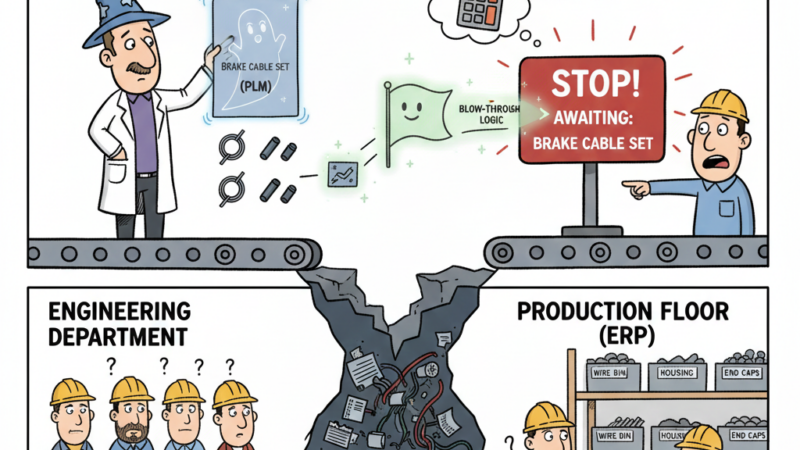
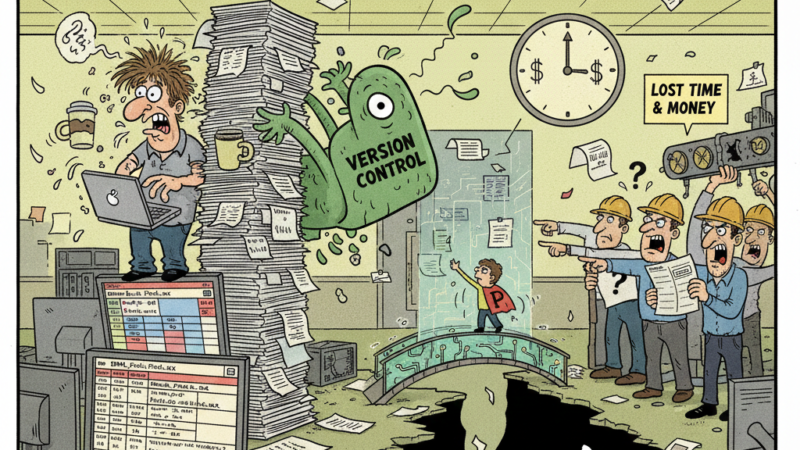
When the software is the protagonist, the project becomes about compliance. You ask your engineers to change how they work to fit the software’s architecture. You force your supply chain team to adopt nomenclature that doesn’t match their reality. The result? “Shadow PLM”—a polite term for the dozens of Excel spreadsheets and “offline” folders your team uses to actually get work done because the official system is too rigid.
Your Unique “Secret Sauce”
Every company has a “secret sauce”—that specific way of collaborating, iterating, or responding to market demands that gives them a competitive edge.
- For a startup, it might be the ability to pivot design directions in twenty-four hours.
- For a legacy manufacturer, it might be a deep, institutional knowledge of material science and safety compliance.
When you let a PLM vendor dictate your “best practices,” you risk diluting that secret sauce. If your story is about how you out-innovate the competition through agile hardware development, but your PLM software forces you into a rigid, waterfall-style stage-gate process, the software isn’t helping you. It’s rewriting your story into something boring and average.
Defining the Protagonist: People and Process
If the company is the protagonist, what does that look like in practice? It starts with two things: Process Clarity and Empowerment.
1. The Process is the Plot
Before a single line of code is configured, you must map your “Value Stream.” How does an idea go from a napkin sketch to a shipping container? Most companies find that their processes aren’t actually written down; they exist in the heads of three people named Dave, Susan, and Marcus.
A PLM journey shouldn’t be about “implementing software”; it should be about codifying your excellence. You are using the tool to solidify the best version of your workflow.
2. The People are the Actors
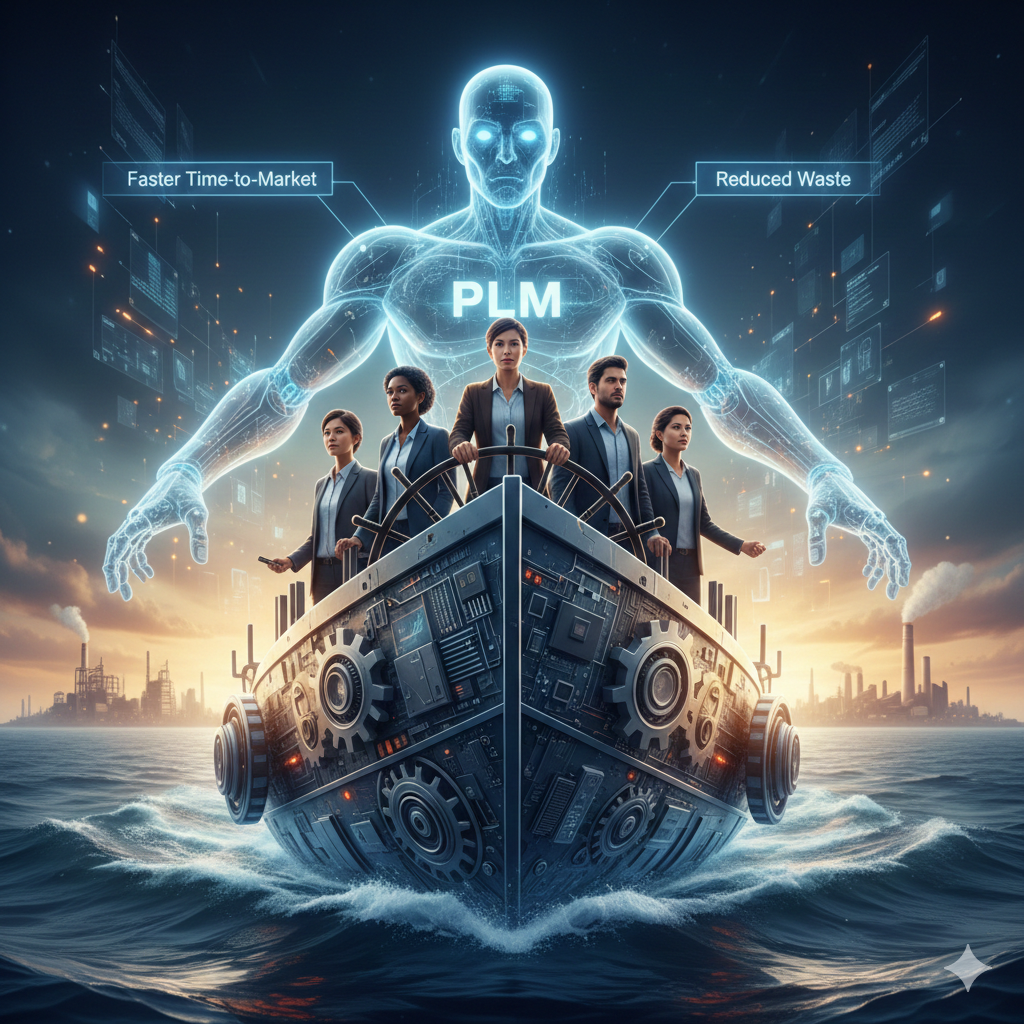
A protagonist has agency. In a successful PLM story, your engineers, designers, and procurement officers are the ones making the moves. The software should act as the “exoskeleton”—giving them more strength and speed—rather than a “straitjacket.”
If your team feels like they are working for the PLM system (data entry, clicking through endless tabs, fixing errors), the software has become the protagonist. If the team feels like the PLM system is working for them (automating mundane tasks, providing instant access to truth, facilitating collaboration), then the company is winning.
How to Re-Center Your Story
If you’re currently in the middle of a PLM rollout and you realize the software has taken over the narrative, it’s not too late to pivot. Here’s how to put your company back in the lead:
| Shift From… | Shift To… |
| Feature-Led: “Can the software do X?” | Outcome-Led: “How does this help us ship 10% faster?” |
| Vendor Best Practices: “What is the standard way to do this?” | Competitive Advantage: “How do we do this better than anyone else?” |
| IT Ownership: Managed by the tech department. | Business Ownership: Managed by the people using it daily. |
The Ghost in the Machine: Data as the Narrative
If the company is the protagonist, then Data is the dialogue. In many failed PLM stories, the data is messy, inconsistent, and mistrusted. When the company takes center stage, it treats data as a strategic asset.
You don’t clean your data because the software requires it; you clean your data because your company cannot make fast, informed decisions without it. When you view data through the lens of business value, the “chore” of data migration becomes a “strategic cleanup” of the company’s history.
Avoiding the “Identity Crisis”
One of the biggest risks of software-led PLM is the “identity crisis.” This happens when a company tries to become something it’s not because the software makes it look easy.
I’ve seen mid-sized custom manufacturers try to implement PLM configurations designed for massive automotive OEMs. They end up buried under a mountain of bureaucracy and administrative overhead that they don’t need. They lost sight of their identity—agile, responsive, and lean—because they let the “big-name” software tell them how a “real” company should operate.
Stay true to your size, your speed, and your culture.
The Moral of the Story
The goal of PLM is not to have a “perfectly implemented system.” The goal is to have a more profitable, more innovative, and more resilient company.
When you look back on your digital transformation five years from now, you shouldn’t be talking about how great the software was. You should be talking about how your company managed to double its product output, how you reduced waste by 30%, or how you managed to break into a new market in record time.
The software will eventually be replaced. Cloud platforms evolve, UI/UX trends change, and newer technologies like AI-driven generative design will come along. If your story is tied to the software, it ends when the software becomes obsolete. But if your story is built on your company’s processes and people, the software is just a chapter.
Summary: Your Action Plan
- Stop the Demos: Pause the feature walkthroughs and spend a week interviewing your “power users” about their daily frustrations.
- Map the Journey: Document your ideal product path without mentioning any software names.
- Appoint a Business Lead: Ensure the person “running” the PLM project isn’t just an IT expert, but someone who understands how the company makes money.
- Measure What Matters: Don’t track “system uptime”; track “time to market” and “engineering change order cycle time.”
Your company is the hero. It’s time to start acting like it.