Remember when “Agile” was the buzzword, promising a revolution in project delivery? For years, companies grappled with implementing pure Agile, often running into walls when it came to traditional budgeting, fixed deadlines, or regulatory compliance. The truth is, very few large organizations today operate in a purely Agile vacuum.
Welcome to 2026, the era of Hybrid Agile.
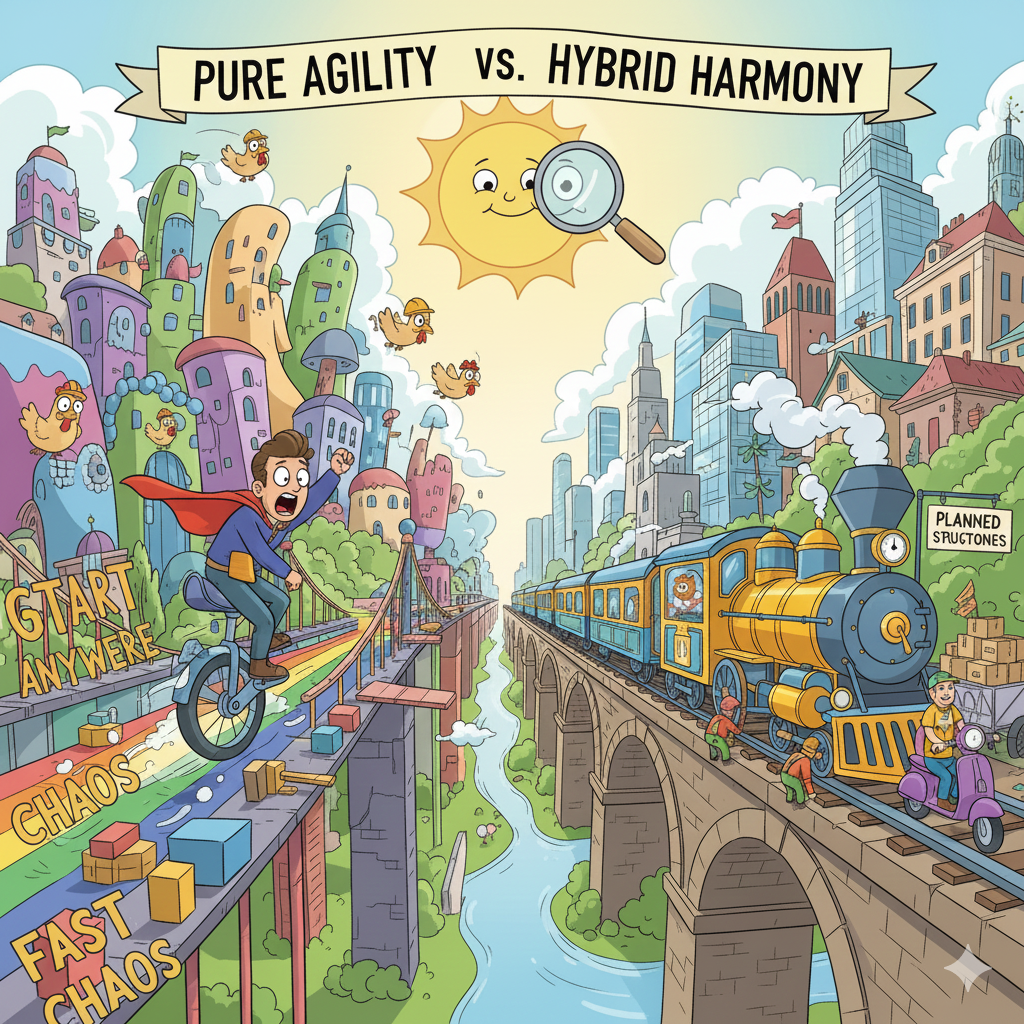
Hybrid Agile isn’t just a compromise; it’s a sophisticated strategy that marries the best of traditional (often Waterfall) methodologies with the flexibility and speed of Agile. For project, program, and especially portfolio managers, understanding and mastering Hybrid Agile is no longer optional – it’s a competitive advantage.
What Exactly is Hybrid Agile?
Think of it as a well-orchestrated symphony. You have a grand score (the Waterfall framework) that sets the overall vision, budget, and major milestones. But within that structure, the individual musicians (your development teams) have the flexibility to improvise and adapt their play (the Agile execution) to create the best possible sound.
Typically, this looks like:
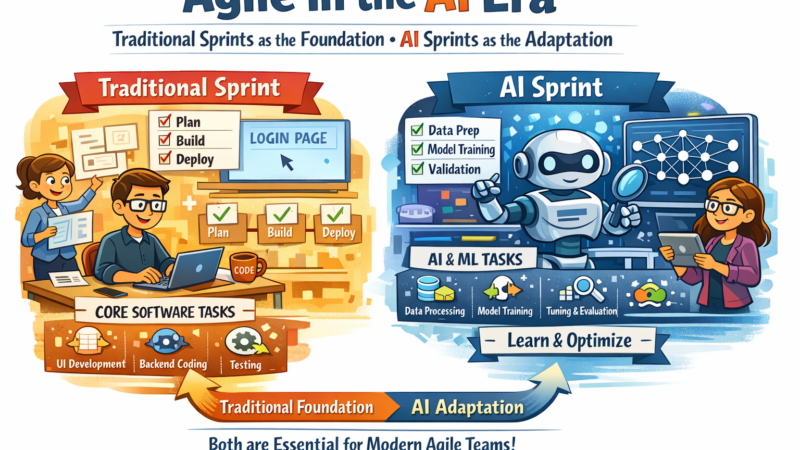
- Waterfall for the “What” and “When”: High-level planning, detailed requirements gathering, architectural design, and overall project scheduling often follow a more sequential, structured approach. This provides the predictability stakeholders crave.
- Agile for the “How”: The actual development, testing, and iterative delivery of features are managed using Scrum, Kanban, or other Agile frameworks. Teams can quickly respond to feedback, refine user stories, and adapt their approach as new information emerges.
Why the Shift? The Imperative for Balance
The move to Hybrid Agile isn’t about failing at pure Agile; it’s about realism. Here’s why it’s gaining traction:
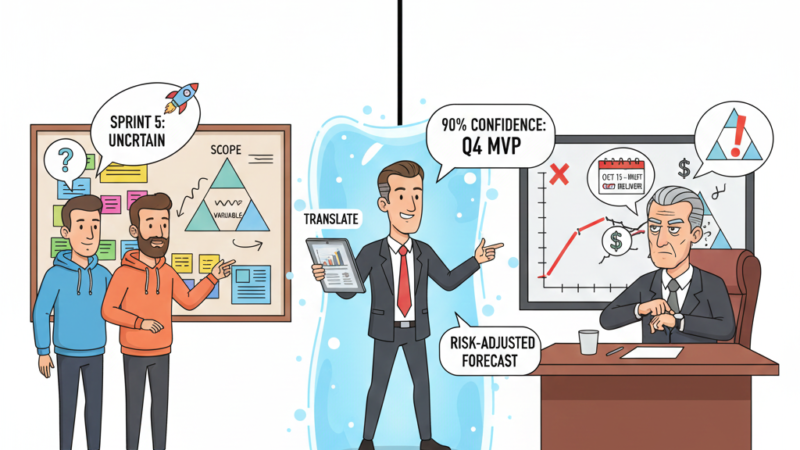
- Stakeholder Expectations: Executives and finance departments still need long-term forecasts, fixed budgets, and clear phase gates for governance and reporting. Pure Agile, with its emergent requirements, can make this challenging.
- Regulatory Compliance: Industries like finance, healthcare, or government often have stringent compliance requirements that demand detailed upfront documentation and rigorous sign-offs, which align more with Waterfall principles.
- Complex Ecosystems: Large enterprises rarely operate a single product. They have interconnected systems, legacy infrastructure, and external dependencies that benefit from comprehensive upfront planning.
- Risk Management: While Agile excels at mitigating technical risk, Hybrid models can provide a broader framework for managing strategic, financial, and organizational risks across an entire portfolio.
The Portfolio Manager’s Hybrid Agile Superpower
For those of us at the portfolio level, Hybrid Agile isn’t just a methodology; it’s a strategic operating model.
- Strategic Alignment: We can use the Waterfall “shell” to ensure every program and project aligns directly with overarching business objectives before execution even begins.
- Optimized Resource Allocation: Hybrid allows for precise upfront capital budgeting across the portfolio, while Agile within each program enables dynamic resource shifts to where they deliver the most immediate value.
- Adaptive Governance: Portfolio Managers can establish “gated Agile” processes, where projects pass through traditional milestones (e.g., funding gates) while maintaining Agile sprints within those gates. This provides both control and flexibility.
- Enhanced Reporting: The Hybrid approach offers clear reporting points for executive stakeholders (the Waterfall milestones) while providing transparency into iterative progress for operational teams (Agile metrics).
Implementing Your Hybrid Approach
Embracing Hybrid Agile requires careful consideration:
- Define Your “Hybrid Mix”: Not all projects need the same blend. Some might be 80% Agile, 20% Waterfall; others might be the reverse.
- Clear Communication: Ensure all teams and stakeholders understand the chosen hybrid model and their roles within it. Transparency is key.
- Tooling Integration: Utilize tools that can bridge the gap between traditional project plans and Agile backlogs (e.g., Jira integrated with Microsoft Project or specialized PPM tools).
- Continuous Improvement: Like any methodology, Hybrid Agile evolves. Regularly review what’s working and what’s not.
The Bottom Line
Hybrid Agile isn’t about choosing sides; it’s about intelligent integration. It acknowledges the realities of large organizations while harnessing the undeniable benefits of agility. For project, program, and portfolio managers, it’s the skill set that will define success in optimizing value, managing complex ecosystems, and driving strategic growth in 2026 and beyond.