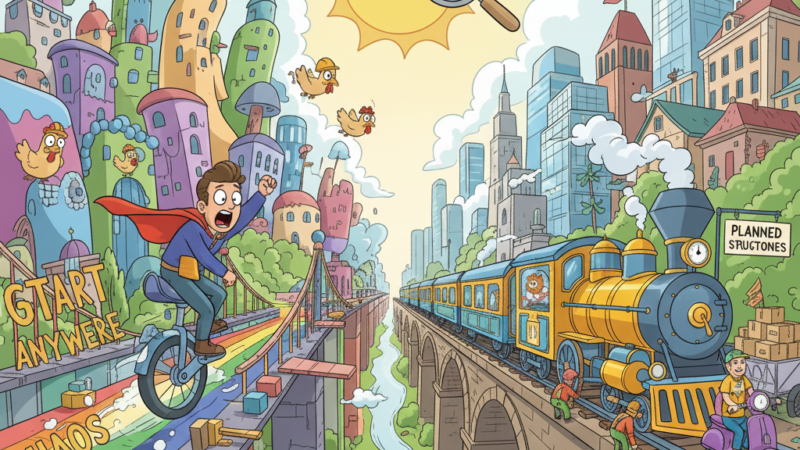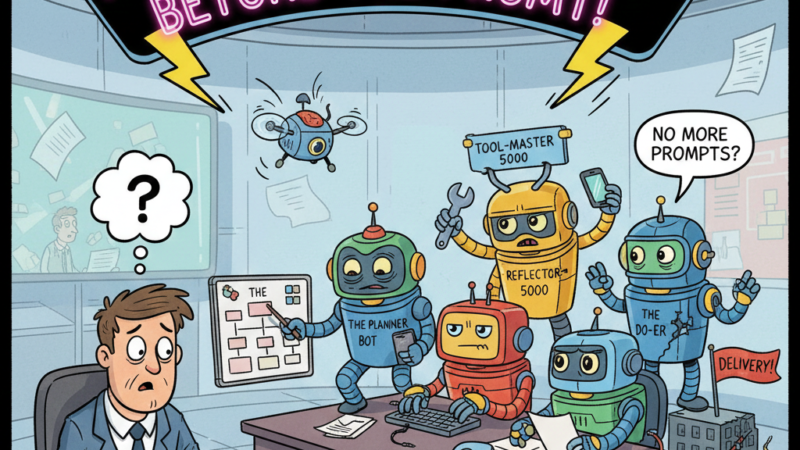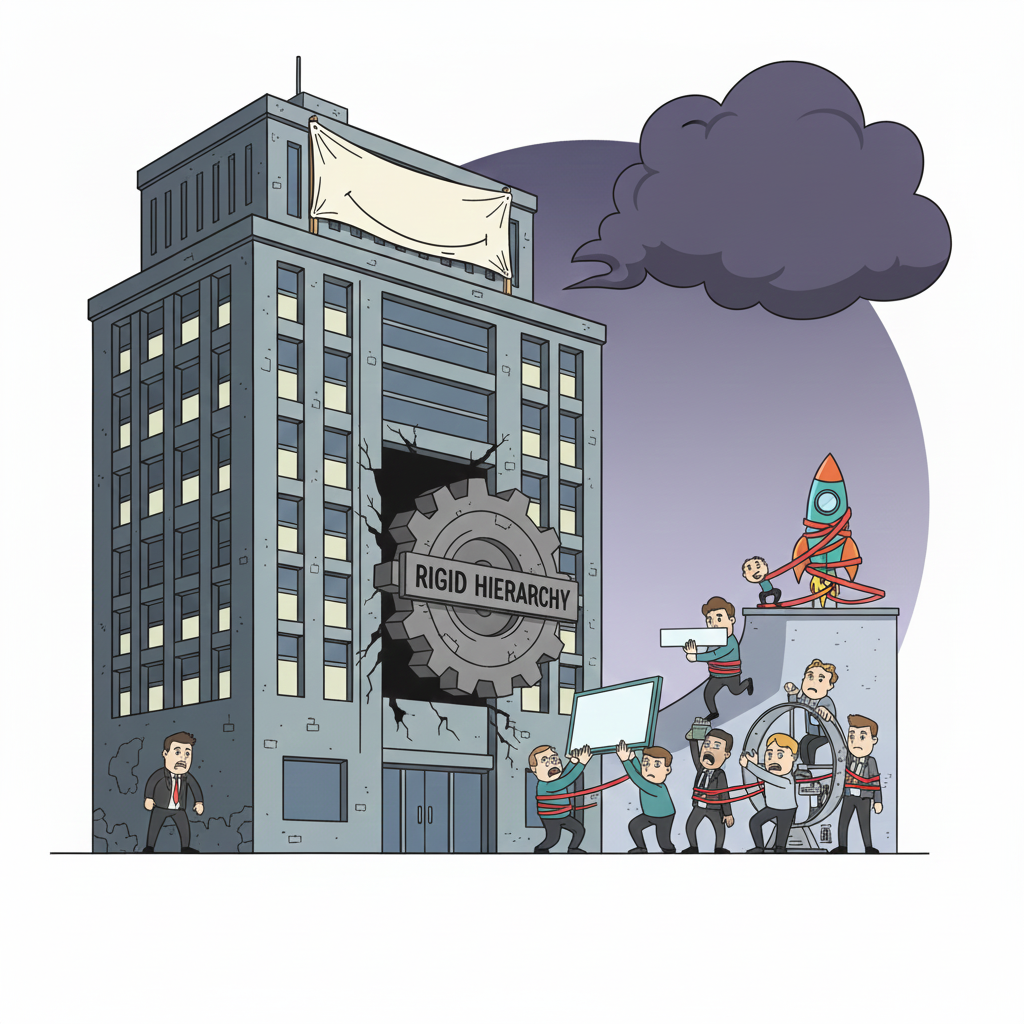
We’ve all seen them: the shiny, new “Agile Transformation” banners, the enthusiastically redesigned office spaces with whiteboards everywhere, the flurry of new terminology in every meeting. “We’re Agile now!” the leadership declares, often with a triumphant flourish. And for a while, there’s a buzz.
But then, slowly, a creeping cynicism begins to set in. Daily stand-ups become status updates to the boss. Sprints are just fixed-date mini-waterfall projects. Retrospectives feel like a box-ticking exercise with no real change ever occurring. The promised empowerment is nowhere to be found.
This, my friends, is the insidious world of “Fake Agile”—a phenomenon far more damaging than simply not doing Agile. It’s a masquerade where rigid, traditional hierarchies simply don Agile costumes, creating a toxic blend that actively kills productivity, stifles innovation, and crushes morale.
The Allure of the Fake Agile or Agile Facade
Why do organizations fall into the trap of “Fake Agile”? Often, it starts with good intentions and a desire to reap the publicized benefits of Agile: faster time-to-market, improved quality, higher customer satisfaction, and happier teams.
The problem arises when the organization tries to achieve these benefits without addressing the fundamental shifts in mindset, culture, and power structures that true Agile demands. It’s like buying a high-performance sports car but insisting on driving it only on muddy country roads while keeping the handbrake on. You have the trappings of speed, but none of the actual performance.
Leadership wants the outcome without the uncomfortable process of change. They want:
- Faster delivery but not empowered teams.
- Adaptability but not decentralized decision-making.
- Transparency but not the exposure of systemic issues.
- Customer focus but not direct team-customer interaction.
So, they cherry-pick the practices (stand-ups, Sprints, Kanban boards) and slap them onto an existing, often deeply ingrained, command-and-control structure. The result is a Frankenstein’s monster: an “Agile” process with a traditional brain, limping along and causing more harm than good.
The Symptoms: How to Spot “Fake Agile” in the Wild
Recognizing Fake Agile is the first step to combating it. Here are some tell-tale signs:
- “Daily Stand-ups” are Status Reports to the Boss: In true Agile, the stand-up is for the team to synchronize and plan their day. In Fake Agile, everyone reports directly to a project manager or a senior leader who is visibly judging their progress. It’s about accountability to an authority, not collaboration within the team.
- Fixed-Scope, Fixed-Date Sprints: The essence of Agile is embracing change. If your sprints are treated as miniature waterfall projects where scope is locked down from day one and changes are fiercely resisted, you’re not doing Agile; you’re just doing smaller, faster waterfalls.
- Command-and-Control Backlog Prioritization: The Product Owner’s role is diminished, with senior management or executives constantly overriding their decisions or dictating the backlog. There’s no real autonomy for the team or the PO to respond to market needs.
- Blame Culture, Not Learning Culture: When things go wrong, the focus is on finding who to blame rather than what to learn from the process. This directly contradicts the Agile principle of continuous improvement and psychological safety.
- No Real Empowerment: Teams are told they are “self-organizing” but have no authority over their tools, their process, or how they solve problems. Every significant decision needs escalation and approval, creating bottlenecks and delays.
- “Agile Theater” Retrospectives: Retrospectives are held, but the outcomes are never implemented, or the same issues are discussed repeatedly without resolution. It’s a superficial exercise to tick a box, not a genuine commitment to continuous improvement.
- Resource Pooling Over Dedicated Teams: Teams are constantly broken up, re-formed, or individuals are pulled onto multiple projects. This destroys cohesion, context, and the ability for a team to develop a shared understanding and rhythm.
- “Agile Coaches” with No Authority or Influence: External coaches are brought in, but they lack the mandate to challenge entrenched behaviors or hierarchical power structures. They become decorative ornaments rather than agents of change.
The Real Cost: Why Fake Agile is Killing Your Productivity
This isn’t just about buzzwords; it has tangible, destructive consequences.
- Demotivation and Cynicism (The Morale Killer): When people see through the facade, they become deeply cynical. They realize the “transformation” is just window dressing. This kills morale faster than almost anything else. Why invest effort in improvement if leadership isn’t serious about change?
- Reduced Transparency (The Hidden Mess): True Agile thrives on transparency. Fake Agile creates a situation where teams pretend to be Agile to appease management, hiding real issues and impediments. Problems fester and only become visible when they’re too big to ignore.
- Slower Delivery (The Irony): The very thing Agile is supposed to accelerate, Fake Agile often slows down. The extra layers of reporting, the constant need for approval, the lack of empowerment, and the fragmented teams create more handoffs and delays than the traditional system ever did.
- Poor Quality (The Technical Debt Bomb): When teams are under pressure to “look Agile” by hitting arbitrary Sprint goals dictated from above, they cut corners. Technical debt explodes, quality suffers, and the product becomes harder and harder to maintain or evolve.
- Stifled Innovation (The Creative Drain): Innovation comes from empowered teams experimenting, failing fast, and learning. When every idea needs a lengthy approval process, creativity is suffocated. Teams become order-takers, not problem-solvers.
- High Turnover (The Talent Drain): Talented individuals, especially those who genuinely believe in Agile principles, will quickly become frustrated in a Fake Agile environment. They’ll seek out organizations where they can actually practice what they preach, leading to a brain drain.
- Increased Waste (The Efficiency Myth): All the extra meetings that serve no real purpose, the documentation nobody reads, the rework from miscommunication—Fake Agile piles on waste under the guise of “process.”
The Root Cause: Fear and the Illusion of Control
At its heart, Fake Agile is often born from fear. Leadership fears losing control. They fear the perceived chaos of self-organizing teams. They fear exposing their own inefficiencies or the uncomfortable truths that transparency might reveal. They believe that by maintaining rigid control, they are mitigating risk, when in reality, they are magnifying it by suppressing the very mechanisms that lead to true adaptability and resilience.
The traditional mindset, deeply ingrained, tells them: “If I’m not telling people what to do, nothing will get done.” They see empowerment as a relinquishing of responsibility, rather than a distribution of it.
Moving Beyond the Facade: A Path to Real Agile
So, what can be done if you find yourself swimming in a sea of Fake Agile?
- Start with “Why”: Revisit the core reasons for adopting Agile. Are those reasons still valid? Are they understood by everyone, especially leadership? Reconnect with the Agile Manifesto and its principles.
- Focus on Mindset, Not Just Mechanics: Shift the conversation from “doing Sprints” to “being Agile.” Emphasize values like courage, focus, commitment, respect, and openness. These are the bedrock.
- Educate Leadership (Patiently and Persistently): This is the hardest but most crucial step. Help leaders understand that their role shifts from telling to enabling. Show them data on the actual costs of Fake Agile (missed deadlines, turnover, low quality). Use analogies, case studies, and coaching.
- Empower Product Ownership: Ensure Product Owners have the authority and mandate to manage the backlog effectively and make decisions based on market and customer needs, not just internal politics.
- Foster True Self-Organization: Give teams autonomy over how they work, how they solve problems, and how they continuously improve. Provide guardrails and support, but remove the handcuffs.
- Embrace Transparency, Even When Uncomfortable: Create psychological safety so teams feel comfortable raising impediments, admitting mistakes, and sharing difficult truths without fear of reprisal. Transparency isn’t just about the board; it’s about the conversations.
- Measure Outcomes, Not Just Output: Shift metrics away from individual velocity (which can be gamed) towards delivered business value, customer satisfaction, team happiness, and lead time.
- Be a “Truth-Teller” (Respectfully): If you’re a Scrum Master, Agile Coach, or even a team member, it’s your duty to gently but firmly point out when practices are deviating from Agile principles and causing harm. Use data and observations, not just opinions.
The Promise of True Agile
Real Agile is transformative. It creates dynamic, responsive, and innovative organizations where people are engaged, empowered, and genuinely proud of their work. It’s a journey, not a destination, and it requires continuous effort, learning, and a willingness to embrace discomfort.
The cost of pretending, however, is simply too high. It drains your resources, crushes your people, and ultimately, fails to deliver the very benefits it promises. Don’t let your organization fall victim to the masquerade. Challenge the status quo, champion true Agile values, and unleash your team’s real potential. Your productivity—and sanity—depend on it.