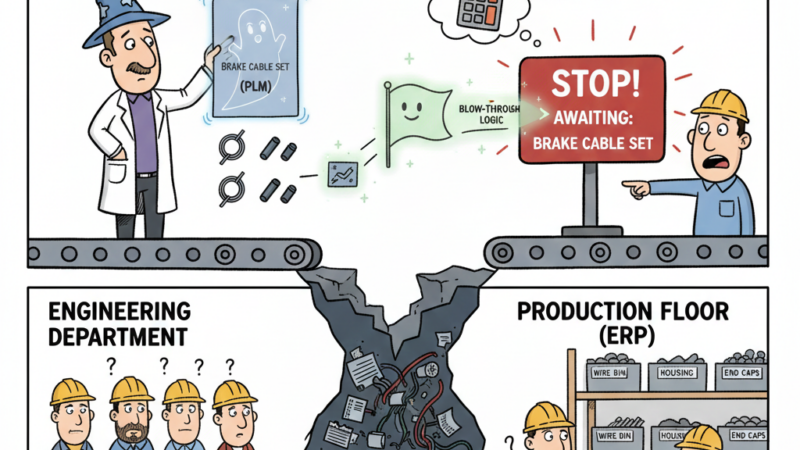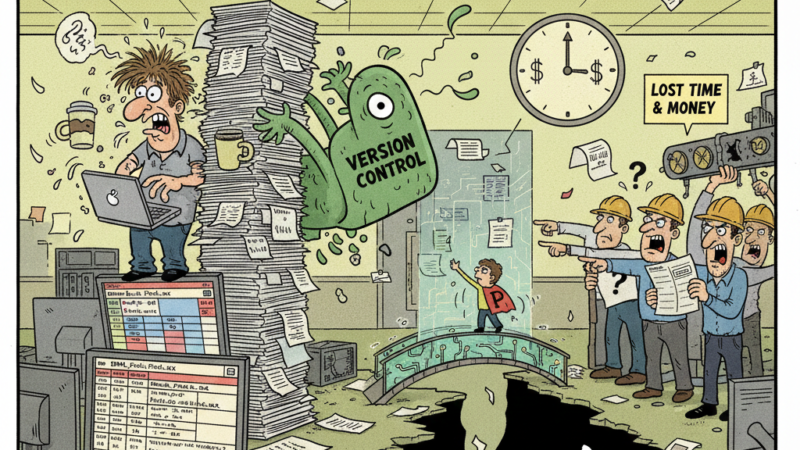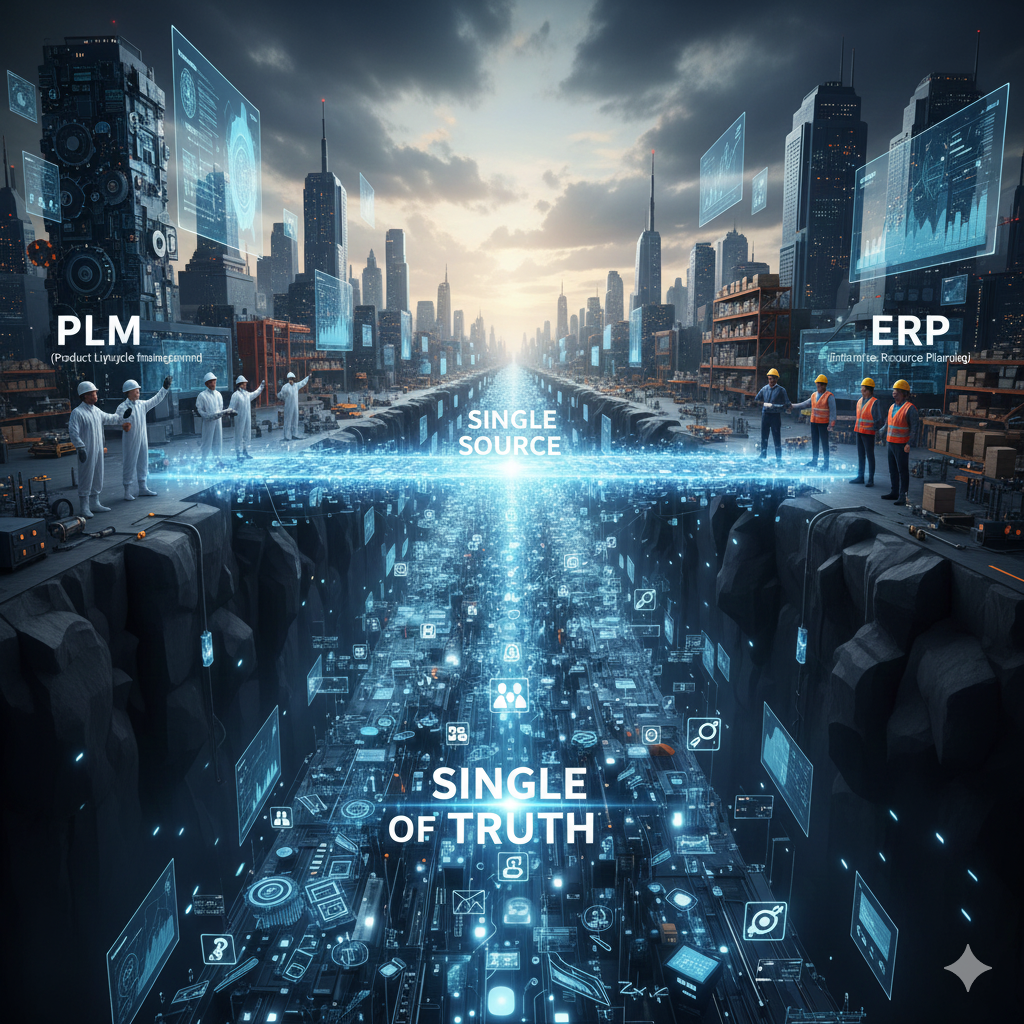
The solution isn’t to replace one system with the other. It’s about intelligent integration and defining clear data ownership.
1. Define Clear Data Ownership
This is the foundational step. Decide which system is the “master” for each data attribute.
- PLM owns: Product definitions, engineering BOMs (EBOMs), part numbers (until released), CAD files, specifications, revision control, engineering change orders (ECOs).
- ERP owns: Manufacturing BOMs (MBOMs – derived from EBOMs), routing information, supplier data, inventory levels, purchasing orders, actual costs, production schedules, sales orders.
This clarity prevents conflicts and ensures that changes are initiated in the correct system.
2. Implement Robust Integration Points
This is the technical heart of bridging the gap. Modern integration platforms and APIs make this far more achievable than in the past. Key integration points include:
- BOM Synchronization: When an EBOM is “released” or “matured” in PLM, it should automatically push relevant data (part numbers, quantities, descriptions) to ERP to generate or update the MBOM. This often involves transforming the engineering view into a manufacturing view, potentially adding phantom assemblies or process items.
- Part Number Management: PLM is typically where new parts are initially created and assigned numbers. Upon release, these part numbers are pushed to ERP to be used in purchasing, inventory, and production.
- Change Management (ECO/ECR): When an Engineering Change Order (ECO) is approved in PLM, the system should trigger updates in ERP for affected BOMs, routings, or other relevant data. This ensures that manufacturing is always working with the latest design.
- Supplier and Cost Data (Bi-directional): While ERP holds the master for supplier pricing and inventory, PLM can benefit from this data during design for “cost-conscious engineering” or “design for manufacturability.” Conversely, early estimated costs from PLM can inform initial financial projections in ERP.
3. Standardize Processes and Workflows
Technology alone isn’t enough. Your teams need to agree on how they will interact with the integrated systems. This means:
- Formalizing Release Processes: When exactly does engineering “hand off” a design to manufacturing? What are the checks and balances?
- Collaborative Change Management: How do operations or supply chain provide feedback to engineering through the PLM system?
- Training and Adoption: Ensuring both engineering and operations teams understand the new integrated workflows and the value they bring.
4. Think Beyond the Hand-Off: Continuous Collaboration
The ideal state isn’t just a clean “hand-off” from design to production, but continuous collaboration throughout the product lifecycle.
Imagine an engineer in PLM designing a new component. With an integrated system, they could instantly see if that component already exists in inventory (from ERP), or if a similar part from a preferred supplier is cheaper. Conversely, production issues identified in ERP could trigger an ECO in PLM for engineering review.
The Payoff: Tangible Benefits
Bridging the PLM-ERP gap isn’t just about elegant architecture; it delivers concrete business advantages:
- Faster Time-to-Market: Streamlined data flow accelerates the transition from design to production.
- Reduced Rework and Scrap: Accurate, synchronized BOMs minimize errors and prevent manufacturing with outdated designs.
- Improved Quality: Clearer traceability from design to components used in production.
- Better Cost Control: Engineers can design with real-time cost data, and operations can plan more efficiently.
- Enhanced Collaboration: Teams across engineering, manufacturing, and supply chain work from the same trusted information.
- Real-time Visibility: A holistic view of product status, from concept to delivery.
In essence, you move from two separate, often conflicting narratives about your product to one cohesive, trustworthy story. This “single source of truth” empowers everyone in your organization to make better, faster decisions, ultimately leading to superior products and a healthier bottom line.