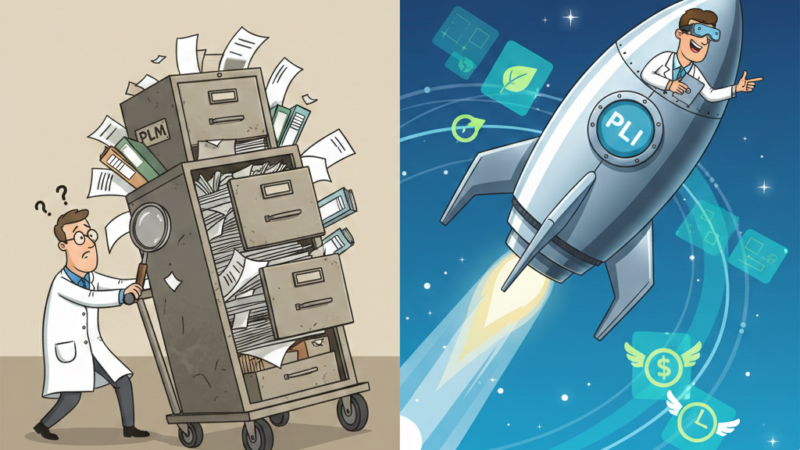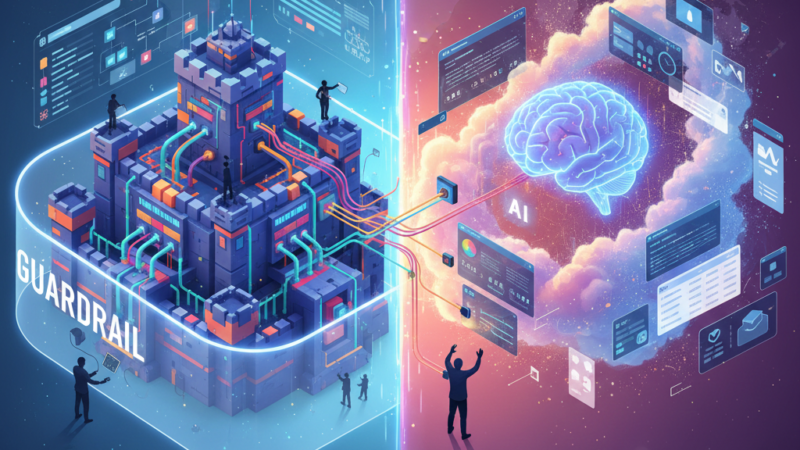
Remember the days of chunky software installations, endless update cycles, and IT departments wrestling with server racks just to keep your Product Lifecycle Management (PLM) system humming? For many, those memories are still a reality. But a quiet revolution has been brewing, and in 2026, it’s no longer quiet. The era of multi-tenant SaaS PLM isn’t just arriving; it’s defining what “modern” even means.
If your PLM strategy isn’t leaning into a truly web-native, multi-tenant SaaS architecture, you’re not just falling behind; you’re actively creating technical debt that will haunt your innovation pipeline for years to come. Let’s peel back the layers and understand why this shift isn’t a trend, but a fundamental necessity.
The Elephant in the Server Room: Legacy PLM’s Hidden Costs
For decades, PLM was the domain of the on-premise, monolithic application. These systems, while powerful for their time, came with a heavy, often unseen, price tag:
Sky-High TCO (Total Cost of Ownership): Beyond the initial license fee, you were on the hook for hardware, infrastructure, ongoing maintenance, dedicated IT staff, security patches, and disaster recovery. It was a complex, expensive beast to feed.
Version Lock and Upgrade Nightmares: Ever postponed an upgrade because it was too disruptive, too expensive, or just too risky? That’s version lock. Companies would deliberately stay on older versions, missing out on critical new features and security enhancements, simply to avoid a multi-month, multi-million-dollar upgrade project.
Data Silos and Integration Headaches: Getting your PLM to talk nicely with ERP, CRM, MES, or even other CAD tools was often a bespoke, custom-coded affair. Each integration was fragile, expensive to build, and even more expensive to maintain.
Lack of Agility and Scalability: Need to onboard a new acquisition’s engineering team quickly? Or spin up a new project with external collaborators? Legacy systems bent under this pressure, requiring significant lead times and capital expenditure.
Security Vulnerabilities: Managing security patches and threat detection across disparate on-premise systems is a full-time job for a team of experts. One missed patch could expose your most valuable IP.
These aren’t just inconveniences; they’re innovation killers. They drain resources, stifle collaboration, and ultimately slow your time to market.
Multi-Tenant SaaS: Unpacking the “Why”
So, what exactly is multi-tenant SaaS, and why is it the answer?
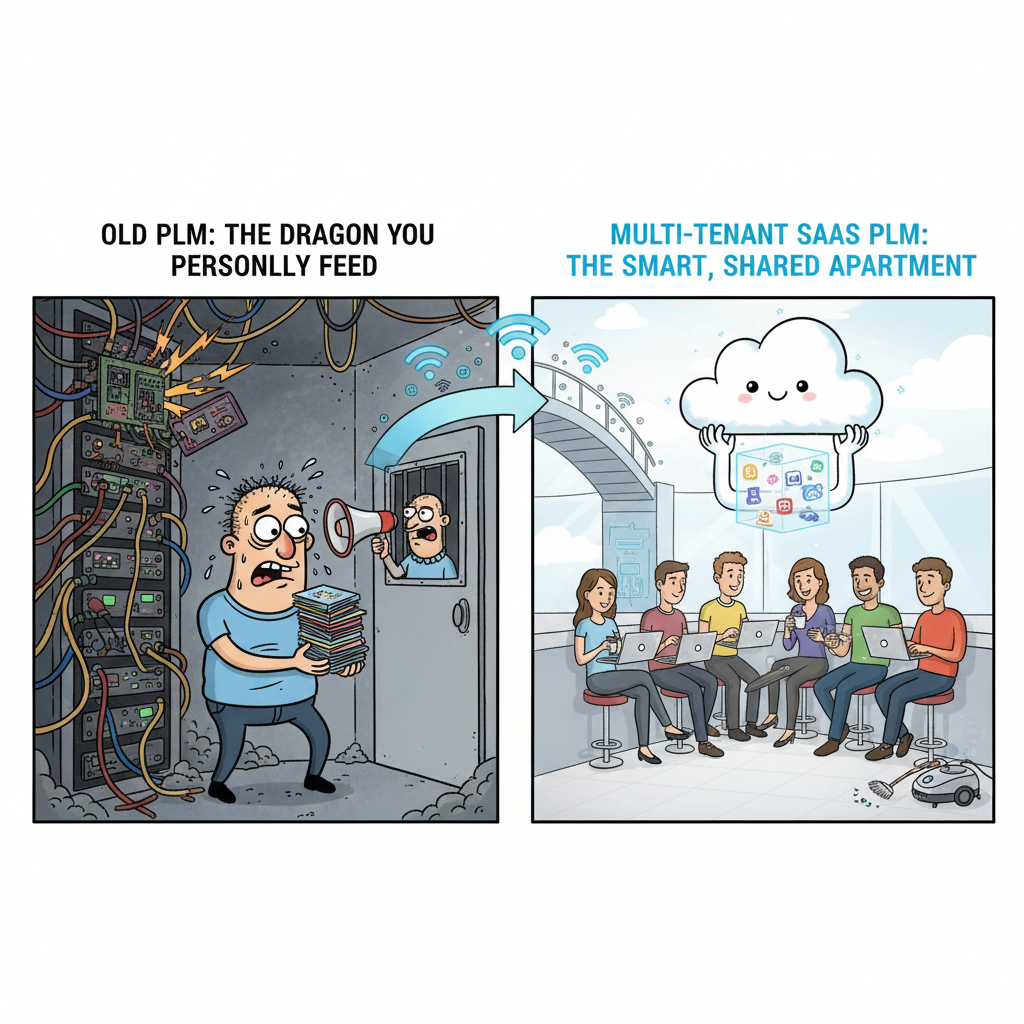
In a multi-tenant SaaS model, multiple customers (tenants) share the same underlying software application and infrastructure, all running on the vendor’s cloud. Crucially, each customer’s data is isolated and secure, much like separate apartments in the same building. You get the benefits of shared infrastructure without compromising your privacy or security.
Here’s why this architecture is a game-changer for PLM:
- Always-On Innovation: No More Upgrade Nightmares
- The Problem It Solves: Version lock and painful upgrades.
- The SaaS Advantage: With multi-tenant SaaS, everyone is always on the latest version. The vendor handles updates seamlessly, often several times a year, in the background. New features, security patches, and performance enhancements are simply there when you log in. Your team spends zero time on infrastructure maintenance and 100% of their time on product development. This rapid iteration capability is paramount in today’s fast-moving markets.
- Unprecedented Scalability and Elasticity
- The Problem It Solves: Fixed infrastructure limits and slow onboarding.
- The SaaS Advantage: Need to add 50 new users for a critical project next week? Expand to a new geographical region? Scale down users during a project lull? Multi-tenant SaaS environments are built to be elastic. Cloud resources can be provisioned or de-provisioned almost instantly, on demand. You pay for what you use, when you use it, making your PLM expenditure truly agile.
- Reduced Total Cost of Ownership (TCO)
- The Problem It Solves: The hidden costs of managing on-premise software.
- The SaaS Advantage: The vendor absorbs the costs of hardware, infrastructure maintenance, security, and many operational tasks. Your capital expenditure (CapEx) shifts to a predictable operational expenditure (OpEx) model, freeing up capital for core business investments. This financial agility is a massive win for CFOs and engineering leaders alike.
- Enhanced Security and Reliability (Yes, Really!)
- The Problem It Solves: The daunting task of in-house security for complex systems.
- The SaaS Advantage: Major cloud providers (AWS, Azure, Google Cloud) and leading SaaS vendors invest astronomical sums in security infrastructure, expertise, and certifications that no individual enterprise could ever match. They employ dedicated security teams, conduct continuous monitoring, and adhere to global compliance standards. Multi-tenant doesn’t mean less secure; it means leveraging world-class security as a service. Think about it: a dedicated team focused solely on the security of their platform is almost always more effective than an internal team stretched thin across myriad applications.
- Seamless Global Collaboration
- The Problem It Solves: Geographically dispersed teams struggling with data latency and accessibility.
- The SaaS Advantage: Access your PLM from any web browser, anywhere in the world, on any device. This breaks down geographical barriers, fosters real-time collaboration, and streamlines communication across your entire value chain – from design and engineering to manufacturing, suppliers, and even customers. No more VPN hassles or slow connections to a central server.
- Unlocking True AI and Machine Learning Potential
- The Problem It Solves: On-premise limitations for processing vast datasets required for AI.
- The SaaS Advantage: AI and Machine Learning thrive on massive datasets and elastic compute power. Multi-tenant SaaS PLM platforms, built on robust cloud infrastructure, are inherently designed to leverage these capabilities. This means:
- Predictive Analytics: Foreseeing potential issues in product development before they become critical.
- Generative Design: AI suggesting optimal design configurations based on parameters.
- Automated Change Management: AI identifying downstream impacts of design changes.
- Smart Search: Instantly finding relevant data across vast archives.
- Natural Language Interfaces: Interacting with PLM using conversational AI.These advanced capabilities are exponentially harder, if not impossible, to achieve efficiently on legacy, on-premise systems.
- Faster Time to Value
- The Problem It Solves: Lengthy implementation cycles for traditional PLM.
- The SaaS Advantage: With no hardware to procure or software to install, implementation times for SaaS PLM are dramatically reduced. Many platforms offer pre-configured industry templates, further accelerating deployment and allowing your teams to start realizing value much faster.
The Vendor’s Perspective: Why Multi-Tenancy Benefits Everyone
For PLM vendors like Siemens (with Teamcenter X), PTC (with Windchill+), and Dassault Systèmes (with 3DEXPERIENCE), the shift to multi-tenant SaaS isn’t just about selling a new product; it’s a fundamental re-architecture of their business model. Why?
- Economies of Scale: Managing a single code base for all customers is far more efficient than maintaining thousands of unique installations.
- Faster Development and Deployment: New features can be rolled out to the entire customer base simultaneously, accelerating innovation.
- Better Data for Product Improvement: Aggregated (anonymized) usage data helps vendors understand feature adoption, identify bottlenecks, and improve the product faster.
- Stronger Security Posture: A single, highly secured environment is easier to defend and maintain than a distributed network of customer-managed servers.
Moving Forward: What to Look For in a Modern PLM Solution
When evaluating PLM solutions today, look beyond the feature list and scrutinize the underlying architecture:
- True Multi-Tenant Cloud-Native: Is it a lift-and-shift of an old application to a cloud VM, or is it fundamentally re-engineered for the cloud, leveraging native cloud services? This is a crucial distinction.
- Openness and Integration Capabilities: Even in the cloud, you’ll need to integrate. Look for robust, documented APIs and established integration partnerships.
- Security & Compliance Certifications: What industry-standard certifications (ISO 27001, SOC 2, specific regional compliance) does the vendor hold?
- Scalability & Performance: Can it handle your peak loads and geographic distribution without performance degradation?
- User Experience (UX): A modern PLM should be intuitive, web-based, and accessible on various devices, not just a clunky desktop client.
Conclusion: Embrace the Web, or Be Left Behind
The shift to multi-tenant SaaS PLM isn’t merely a technological upgrade; it’s a strategic imperative. It’s about empowering your engineering teams with immediate access to cutting-edge tools, fostering seamless global collaboration, drastically reducing IT overhead, and building an innovation engine that can adapt at the speed of modern business.
The future of product development lives on the web, and the PLM solutions that truly embrace this reality are the ones that will lead manufacturers to success in the increasingly complex, dynamic, and interconnected world of 2026 and beyond. If your PLM isn’t built for the web, it’s not truly built for the future.